Why Dog Pee Smells Worse in Southern Utah Summers
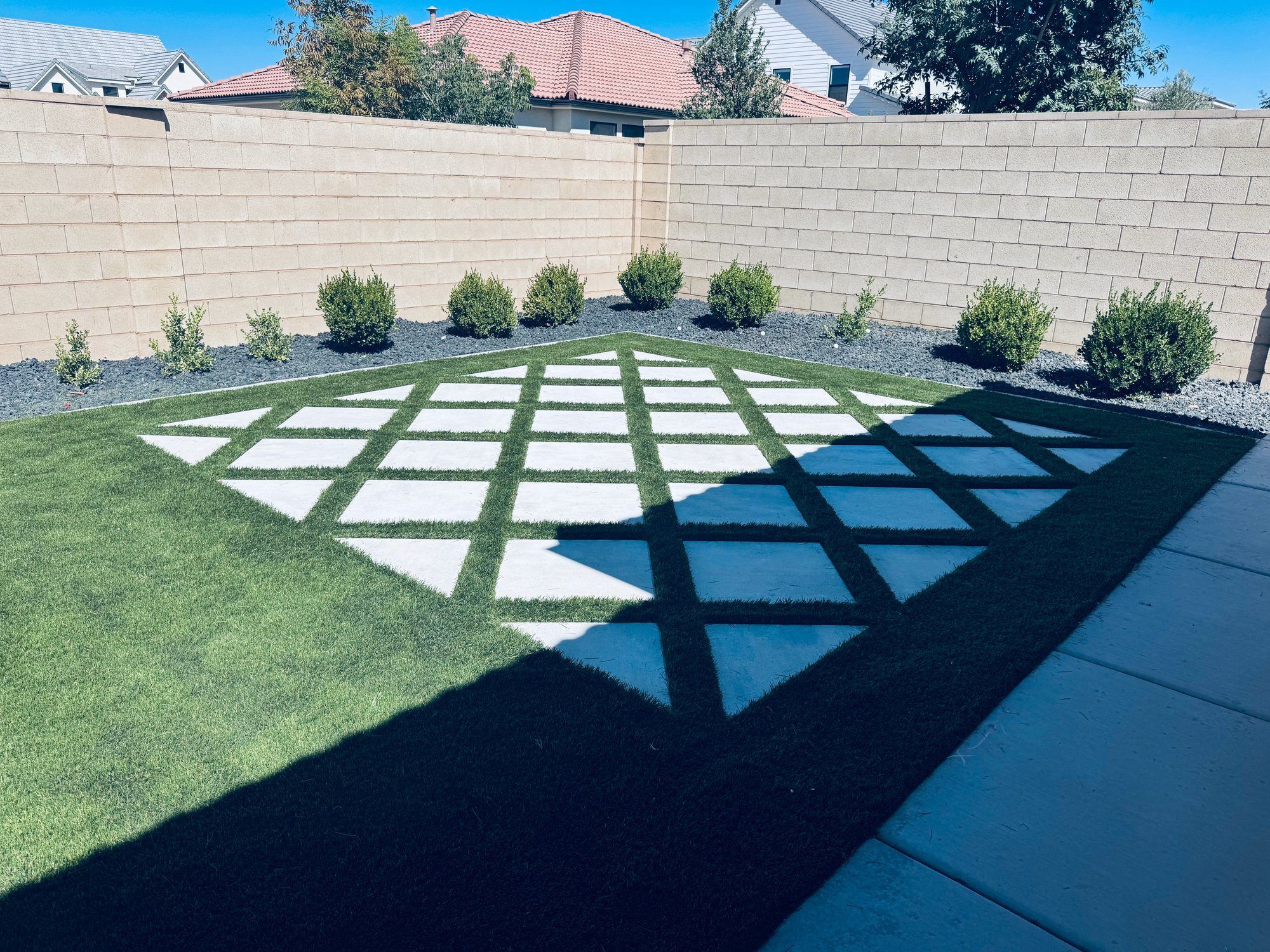
If you live in St. George and you own a dog, you already know the pattern. Your artificial turf is fine in March. Still fine in April. By mid-June the backyard has a faint ammonia edge. By the Fourth of July it smells like a kennel. By August it’s so bad you stop letting guests walk through it.
This is not your imagination. It’s a specific, well-understood chemical reaction, and Southern Utah’s climate is essentially optimized to produce it. Here’s the full explanation.
The short version
Everything in the urine-to-ammonia chemical pathway runs faster at higher temperatures. When your turf’s surface temperature climbs above about 100°F (which it does in St. George from May through September), bacterial breakdown of urine accelerates, ammonia volatilization speeds up, and what was an invisible problem in spring becomes an unmistakable one in summer. Southern Utah’s dry desert climate makes this worse because the surface temperature of artificial turf routinely hits 140°F on sunny afternoons, even when the air temperature is “only” 105°F.
The chemistry, step by step
When your dog urinates on artificial turf, the liquid drains through the fibers and soaks into the infill layer below. That urine contains urea, uric acid, creatinine, and a bunch of other organic compounds. The urea is the star of this show.
Bacteria in the infill produce an enzyme called urease. Urease catalyzes a reaction that converts urea plus water into ammonia (NH₃) and carbon dioxide (CO₂). That’s the reaction that creates the smell. Ammonia is what your nose actually detects.
Three things control how fast this reaction runs:
- Temperature. Ureolysis roughly doubles in speed for every 10°C increase. Going from a 65°F spring day to a 105°F summer day more than triples the reaction rate.
- Moisture. Bacteria need moisture to stay active. Drier turf is less bacterially active; humid turf is more active.
- Urea concentration. More urine means more substrate for the bacteria. Multi-dog households run hotter on this axis.
Notice that Southern Utah hits the extremes on two out of three. We don’t have the moisture advantage you’d find in a humid climate, but the heat difference alone is enough to push ureolysis into overdrive from late spring onward.
Why surface temperature matters more than air temperature
Here’s the part most homeowners don’t know. The air temperature in St. George on a typical July day is 105°F. That’s already hot. But the surface temperature of your artificial turf, sitting in direct sunlight, is much higher.
Measurements typically show artificial turf surface temperatures 30-50°F above ambient air temperature on sunny days. At 105°F air temperature, the turf surface can reach 135-155°F. Green nylon and polyethylene absorb heat aggressively and don’t dissipate it the way real grass does, because real grass transpires water (essentially sweating to cool itself) and artificial turf cannot.
What does 140°F mean for the urea-to-ammonia reaction? It means the bacterial activity is running at roughly 4-5 times the rate it was at 70°F. Ammonia is volatilizing (turning from liquid to gas) faster. The result is a cumulative acceleration that turns a dormant spring lawn into a summer crisis in about 6-8 weeks.
Why the smell seems to “suddenly” get bad
Pet owners usually describe the summer smell as appearing “overnight.” That’s because the problem is accumulative and nonlinear. Through spring, bacterial colonies in the infill are growing slowly. The ammonia produced is low enough that your nose, which adapts to low-level smells, ignores it. You don’t notice anything.
Then the heat kicks in. Bacterial activity doubles or triples. Ammonia production doubles or triples. Your nose’s adaptation threshold is exceeded, and suddenly you notice the smell that was already starting to build a month earlier. The smell didn’t arrive overnight; your perception of it did.
Why cooler climates don’t have this problem as badly
A dog-owning household in coastal San Francisco has the same urine chemistry, the same infill, the same artificial turf. But they don’t have the same smell problem. Why?
- Cooler average temperatures keep ureolysis running at a slower baseline rate.
- Higher humidity actually helps here, counterintuitively, because frequent rain rinses surface-level contamination (but also: humid areas don’t use artificial turf as much in the first place).
- Less direct sunlight on many coastal properties means lower surface temperatures.
St. George is the opposite on every axis. Hot, dry, high-sunlight, artificial turf practically everywhere. The climate is essentially engineered to produce the worst-case version of this problem.
What this means for Southern Utah pet owners
A few practical conclusions:
- Summer is the service window. If you’re going to get one professional turf cleaning per year, do it in late May or early June. That resets the bacterial cycle before the hottest months hit. Waiting until August means living with the smell for all of June and July.
- Monthly service during summer is the game-changer. Our Pet Owner monthly plan exists specifically because one-time cleans, while effective, can’t keep up with the June-through-September acceleration curve for pet households. Monthly enzyme treatment keeps the baseline low enough that the bacterial cycle never reaches crisis point.
- Don’t wait for the smell to get unbearable. By the time you notice it, it’s been building for weeks. Schedule preemptively in late spring.
- Ventilate the backyard when possible. Shade structures, landscaping that encourages airflow, and limiting standing water all help. Not dramatically, but some.
- Consider ZeoFill. ZeoFill is a volcanic mineral infill that chemically absorbs ammonia as it’s produced. It’s the single most effective product upgrade for pet households in hot climates. We can swap silica sand for ZeoFill during any service visit.
The takeaway
Summer pet odor on artificial turf in Southern Utah isn’t a surprise, it’s a predictable chemical reaction running on fast-forward. The urea-to-ammonia pathway accelerates with temperature, St. George turf runs 30-50°F above air temperature in direct sun, and the combination means pet households cross a perceptible-smell threshold reliably every June.
The fix is to treat the infill with commercial enzymes before the heat curve hits, and ideally to stay on a monthly cadence through the hot months. It’s not rocket science; it’s just chemistry that Southern Utah’s climate happens to run harder than almost anywhere else.
For local context on how St. George climate affects artificial turf more broadly, see Why St. George Summers Destroy Artificial Turf. For the biology of why urine smells in the first place, see Why Does My Artificial Turf Smell Like Dog Pee?.
And if you’re already in crisis mode and need professional help this week, get a free quote. We prioritize St. George pet owners in summer because we know the timeline is short.