Why St. George Summers Destroy Artificial Turf
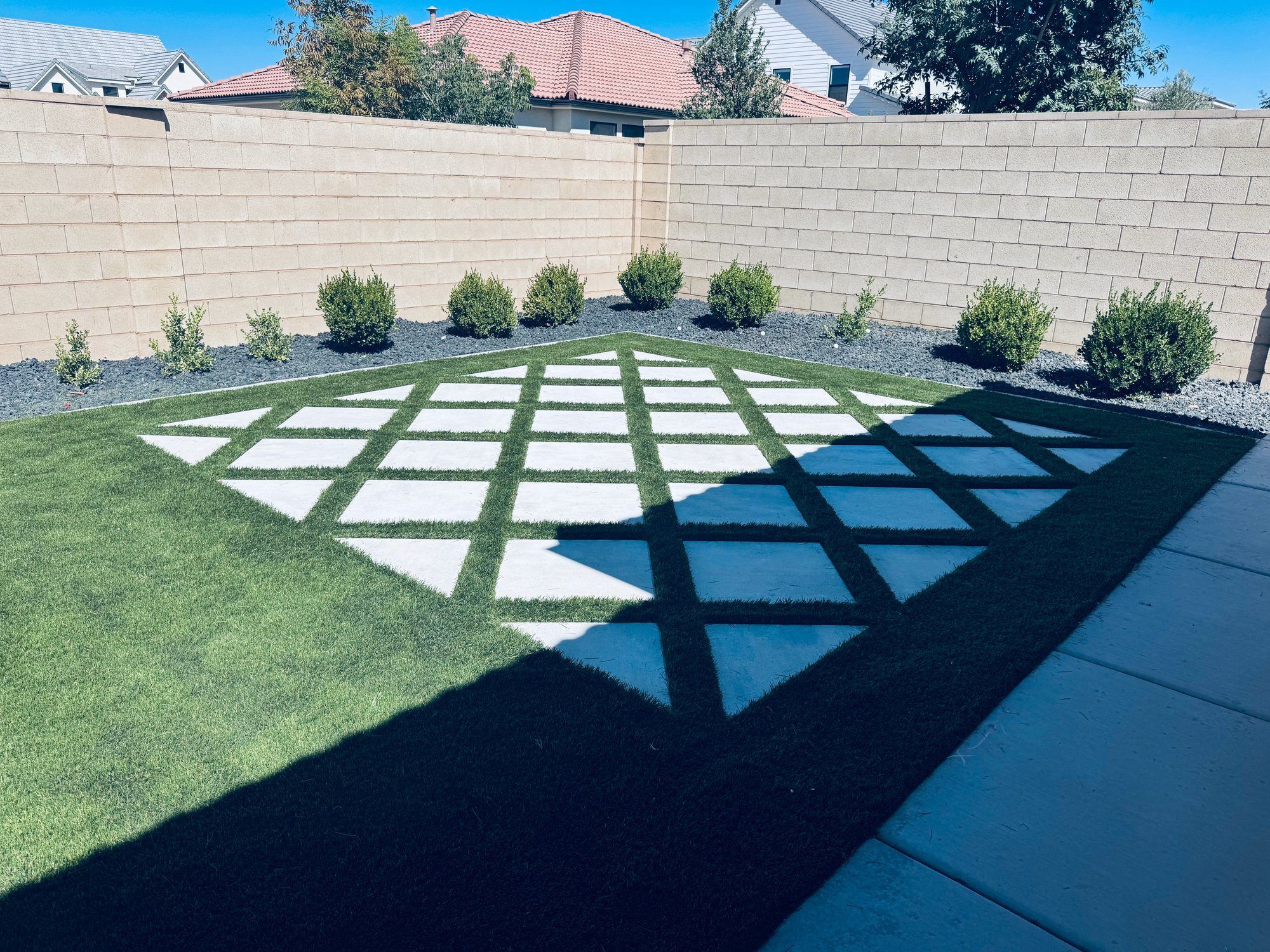
If you drive through any St. George neighborhood built between 2018 and 2022, you’ll notice something consistent: artificial turf. A lot of it. Big backyards, side yards, dog runs, front walkways. For four or five years it was the default landscaping choice for new-build homes, water-conservation-minded HOAs, and pet owners who wanted a low-maintenance lawn.
Now, in 2026, a lot of that turf is in rough shape. And it’s not because the turf was bad. It’s because Southern Utah has a very specific combination of environmental factors that punish artificial grass harder than almost anywhere else in the country. This post is the local breakdown.
The environmental combination
Four things make Washington County uniquely brutal on artificial turf:
1. Extreme summer surface temperatures. Our air temperature hits 105°F regularly from June through September. Artificial turf surface temperatures run 30-50°F above ambient, which means turf fibers in direct sunlight routinely exceed 140°F. That heat accelerates every chemical and biological process happening in the turf, from UV fiber degradation to bacterial ureolysis (the pet odor pathway, covered in detail in this post).
2. High UV intensity. Southern Utah’s elevation and low humidity mean UV exposure is significantly higher than at sea level. UV breaks down the plastic polymers in turf fibers over time, causing color fading, fiber brittleness, and eventual fraying. Cheap turf shows this within 2-3 years; premium turf holds up longer but still accumulates damage faster than it would in a cloudier climate.
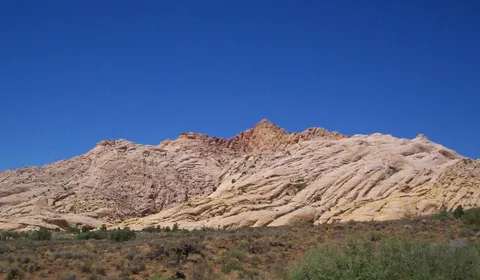
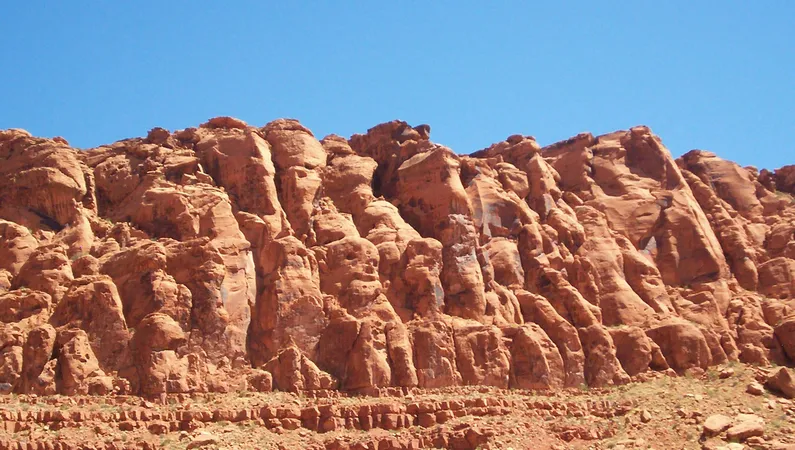
3. Red rock dust. Our signature red sandstone dust is fine enough to settle deep into the infill layer, where it affects drainage, discolors lighter-colored fibers, and accumulates in ways that DIY maintenance can’t address. If you’ve ever looked at a “new” piece of St. George turf and wondered why it looks dingy despite minimal traffic, it’s probably the dust.
4. High pet ownership. Washington County has above-average dog ownership per household, and a lot of that ownership concentrated into the 2018-2022 building boom as families moved in specifically for the backyard space. More pets means more urine, and more urine combined with our summer heat is the recipe for the pet odor problem we covered in depth elsewhere.
No single one of these would be a crisis. The combination is what makes St. George unusually hard on artificial grass.
The year-by-year decline pattern
We see the same pattern in backyard after backyard. If the turf was installed in 2020:
Year 1 (2020): Looks great. Customers love it. “Why did we wait so long?”
Year 2 (2021): Still looks fine. Some slight matting in high-traffic paths. First winter storms settle dust into the fibers but nothing alarming.
Year 3 (2022): First signs of wear. Slight color fade visible on sun-facing areas. If there are pets, a faint odor on summer days. The homeowner notices but doesn’t act.
Year 4 (2023): Clear matting in high-traffic zones. Pet odor is now noticeable from across the yard in summer. Customer starts searching for solutions. Probably buys a bottle of retail enzyme cleaner. Gets temporary improvement.
Year 5 (2024): The turf looks noticeably old. Pet odor is bad enough that guests comment. Retail cleaners don’t work anymore. Customer wonders if they need to replace the whole installation.
Year 6 (2025): Customer gets quotes on replacement. Finds out replacement costs $15,000-$40,000 depending on yard size. Starts looking for alternatives. Finds professional cleaning services.
Year 7 (2026): The St. George install boom hits peak service-needed window. This is where we live, professionally, and it’s why our business exists.
Most of the turf currently in Washington County backyards is in year 4-6 of that cycle. Some of it is worse because the homeowner has been doing DIY maintenance that didn’t stick and the contamination has accumulated.
The install boom and why 2026 is the inflection point
From roughly 2018 through 2022, St. George went through a building boom that coincided with a lot of artificial turf decisions. New construction homes in Washington Fields, Little Valley, Coral Canyon, and Bloomington’s expansion areas were installing artificial grass as the standard backyard finish. HOAs in Sun River, Entrada, and newer developments were mandating or heavily encouraging artificial turf for water-conservation reasons.
2026 is 4-8 years into that boom. Which is exactly the window where professional cleaning transforms turf from “looks old, smells bad” to “looks new again, smells fine.” Before year 3, professional service is overkill. After year 8, replacement often starts to look reasonable. In between, there’s a clear period where one good deep clean plus ongoing monthly maintenance can extend turf life dramatically at a fraction of replacement cost.
The math: professional cleaning costs $299-$599 per deep clean, or $89-$179/month for maintenance. Turf replacement costs $15,000-$40,000 for a typical backyard. If professional service extends your turf life by even 2 years, you’ve saved thousands.
Neighborhood-level patterns we see
Some specific things we’ve noticed across Washington County:
- Bloomington has larger yards with more total turf surface area. Most service calls here are for pet odor, since Bloomington has a high concentration of homes with dogs.
- Little Valley has younger turf than most neighborhoods because the construction boom peaked later. Most Little Valley homes are in year 3-4 right now, which means they’re hitting first-noticeable-problems and it’s a perfect window for a first professional service.
- Washington Fields has the highest concentration of same-age turf in the county. Everything was built 2019-2022. Almost every home we visit in Washington Fields is on the same timeline, which makes it easy to recommend service cadences.
- Coral Canyon (both Washington and Hurricane sides) has unusually high pet ownership density and summer heat runs even hotter than central St. George. This is where we see the worst pet odor cases, and where the monthly plan matters most.
- Green Spring and SunRiver have HOA common-area turf that needs different service patterns than residential backyards. We handle both.
- Ivins is different because a lot of homes are vacation rentals or second homes. Service cadences cluster around seasonal transitions rather than running monthly.
For a deeper breakdown of each neighborhood, see our St. George service area page.
What St. George homeowners should do this year
If you have artificial turf in Washington County and it was installed between 2018 and 2022, here’s the honest recommendation:
-
Get one professional deep clean this spring or summer. Even if your turf “seems fine,” you’re probably in year 4-6 of the decline curve and the results will surprise you. A single deep clean in 2026 will set you up for several more years of useful life.
-
Consider a monthly plan if you have pets. The Pet Owner plan at $129/month prevents the cycle we described from ever reaching the bad phase. It’s the cheapest long-term solution for pet households.
-
Don’t skip infill inspection. Ask whoever does your cleaning to measure your infill depth and tell you honestly whether you need a top-up. Most turf in year 5+ has lost at least some infill, and low infill is the root cause of a lot of cosmetic problems.
-
Upgrade to ZeoFill during a top-up if you have pets. Volcanic mineral infill absorbs ammonia and cuts baseline odor significantly. Worth the slightly higher cost per bag.
-
Don’t wait until the smell is unbearable. By the time you notice a strong smell, the bacterial cycle has been running for weeks and the cleanup is bigger. Preemptive service in late spring (May or early June) is the move.
The takeaway
Southern Utah’s climate is uniquely rough on artificial turf because of the combination of extreme summer surface temperatures, high UV, red rock dust, and high pet ownership. None of those are problems individually; together they compress the useful life of artificial grass by several years compared to coastal or cooler markets.
But the fix is straightforward: professional deep cleaning once or twice a year, or a monthly maintenance plan for pet households. Done at the right time (specifically, year 3-6 of the turf’s life), one good service visit can restore turf that the homeowner was considering replacing.
For our pricing, see the pricing page. For a quote specific to your yard, contact us. And if you’re still in denial that your turf needs service, at minimum read why artificial turf smells like dog pee and see if any of it sounds familiar.