Why Artificial Turf Smells Like Dog Pee
If you’re reading this, your backyard smells like a kennel and you’re trying to figure out why. The short version: the smell is not in the grass blades. It’s in the infill underneath. And the reason it won’t go away no matter how many times you rinse it is that water is making it worse, not better.
This post walks through the actual biology of what’s happening, why summer makes everything worse (especially in Southern Utah), and what actually works to fix it.
TL;DR
Dog urine drains through artificial turf and settles in the infill layer below. The urea in the urine breaks down into ammonia, which feeds bacteria, which produces more smell. Heat accelerates every step. Water spreads the urine without neutralizing the compounds. The only thing that actually breaks the cycle is enzyme treatment that chemically converts the urea and uric acid into odorless components.
If you want the full story, keep reading. If you just want to book a pet odor treatment, here’s the service page.
Why artificial turf smells at all
Real grass has a living microbiome in the soil that breaks down urine over days or weeks. Worms, bacteria, and microorganisms process urea and uric acid, and the nitrogen eventually becomes plant food. The lawn self-cleans, more or less.
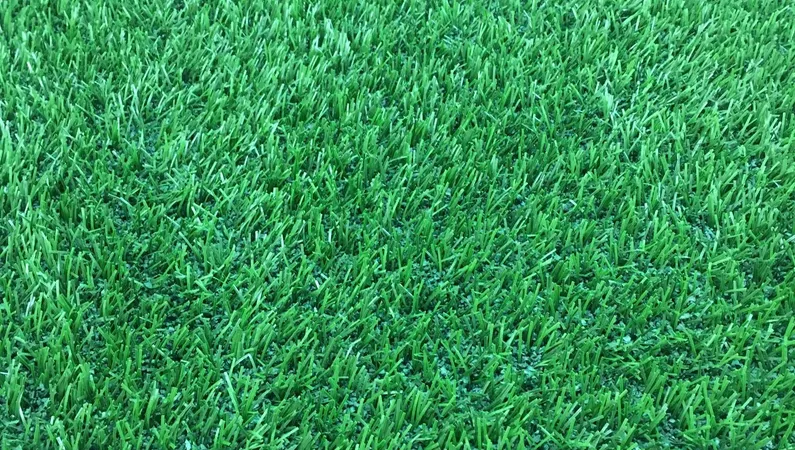
Artificial turf has none of that. The “soil” under fake grass is either compacted earth or crushed stone, topped with a layer of granular infill (silica sand or, increasingly, volcanic minerals like ZeoFill). When a dog urinates on artificial turf, the liquid drains straight through the blades and soaks into the infill, where it stays until something removes it.
And by “something removes it,” most homeowners assume rinsing with a hose does the job. Unfortunately, water isn’t a cleaning agent. It’s a carrier.
The actual chemistry
Dog urine contains a mix of urea, uric acid, ammonia, creatinine, and salts. The urea is the big problem. Here’s what happens to it:
- Urea settles into the infill after draining through the turf fibers.
- Bacteria already living in the infill start breaking down the urea into ammonia, CO₂, and other compounds. This process is called ureolysis, and it’s the same thing that makes cat litter smell bad.
- Ammonia is what your nose detects. It volatilizes (turns into gas) at room temperature and rises up through the fibers into the air. The more ammonia, the stronger the smell.
- The bacterial colony grows. Each round of urine is a new meal. Colonies expand, the infill becomes saturated with organic material, and the smell compounds over time.
This is the same chemistry that happens in kennels and dog daycares, and it’s why commercial facilities use enzyme-based cleaners on a weekly schedule. The cycle doesn’t stop on its own. It just gets worse.
Why heat makes it dramatically worse
Every part of this chemistry is temperature-dependent. Ammonia volatilizes faster in heat. Bacteria multiply faster in heat. Chemical reactions in the infill run faster in heat. When surface temperatures on your backyard turf climb above 110°F, which they do in St. George from late May through September, the bacterial cycle accelerates dramatically.
That’s why most pet owners in Southern Utah notice the smell specifically in summer. The turf was fine in March. By July, the backyard is unusable. It’s not that your dog suddenly started producing more urine. It’s that you crossed a temperature threshold where the biology sped up.
For a deeper look at the Southern Utah angle, see Why St. George Summers Destroy Artificial Turf.
Why rinsing with water makes it worse
Here’s the counterintuitive part. Every pet owner’s first instinct is to hose down the backyard when it starts smelling. It feels like cleaning. It smells better for an hour. And then the smell comes back stronger the next day.
What’s actually happening:
- Water dilutes the surface layer but pushes the urine deeper into the infill, where it’s harder to reach.
- The drying process reconcentrates the compounds. As the water evaporates, the urea and ammonia are left behind, often in higher concentrations than before.
- Moisture plus heat is a perfect bacterial environment. You’ve basically just watered the bacteria colony.
- You moved the problem around. If there was a hotspot in one corner, rinsing spreads it across the whole yard.
Adding water to a urine-contaminated turf is a net negative. It’s one of the most common mistakes pet owners make, and it’s a big reason why DIY “cleaning” fails.
What about vinegar, bleach, and enzyme sprays from the hardware store?
Vinegar: mildly acidic, which does kill some bacteria briefly. But vinegar is also hard on synthetic fibers over time, and it doesn’t neutralize urea. The smell comes back within a week.
Bleach: strips the green color from artificial turf fibers and still doesn’t actually break down urea compounds. Also toxic to pets if they lick the turf before it’s fully rinsed. Avoid.
Oxygen-based cleaners (OxiClean, hydrogen peroxide): work on surface stains but do nothing to urine crystals in the infill. You’re cleaning the blades while the problem lives below them.
Retail “turf spray” deodorizers: most of these are fragrance overlays. They mask the smell for a few hours. They do not remove it. You’ll see a pattern here: consumer products either target the wrong layer of the problem or don’t actually neutralize the urine compounds at all.
What actually works: enzyme treatment
Commercial-grade enzyme cleaners do exactly one thing well: they chemically convert urea and uric acid into non-odorous components. The enzymes act as catalysts that break molecular bonds in the urine compounds. Once the urea is gone, the bacteria have nothing to eat, the ammonia production stops, and the smell disappears.
Three things matter about enzyme treatment:
- Concentration. Commercial enzyme solutions are several times stronger than anything you can buy at a hardware store. The retail stuff is for pee accidents on furniture, not for yards.
- Dwell time. Enzymes need 15 to 30 minutes of contact with the contaminated infill to do their work. Spraying and walking away won’t work.
- Full coverage. Hotspot treatment alone isn’t enough. You need to treat the whole area because urine has usually spread further than you can see.
This is the core of what we do at Red Rock Turf Care. Every pet odor removal service we perform uses a commercial enzyme application followed by full-surface coverage and proper dwell time. It’s not complicated chemistry, but it does require the right product applied correctly.
How often does pet-owner turf need this treatment?
For most households with one or two dogs, a single treatment keeps the smell gone for 3 to 6 months. For multi-dog households, or for turf that’s been accumulating urine for years without professional service, we typically recommend two treatments 30 days apart followed by monthly maintenance.
That’s part of why our monthly plan exists. The Pet Owner tier includes a monthly enzyme treatment that prevents the buildup cycle from ever reaching the point where your backyard smells.
What to do right now
If your backyard is already at the “unusable” stage, here’s the sequence that works:
- Stop rinsing it with water. This is the hardest habit to break because it feels productive. Resist.
- Pick up solid waste promptly. This doesn’t fix the smell, but it prevents further contamination.
- Book a professional pet odor treatment. One visit will usually reset the situation. From there, you can decide whether to stay on a monthly plan or come back for a one-time clean every 3 to 6 months.
For a fair price comparison on what professional treatment costs in St. George, see our pricing page. Spoiler: it’s almost certainly cheaper than replacing the turf, which is what pet owners often consider once they give up on fixing the smell themselves.
The takeaway
Artificial turf doesn’t smell like dog urine because the grass is bad. It smells because of a specific, predictable chemical cycle that’s happening in the infill below the fibers, and that cycle won’t stop on its own. Heat accelerates it. Water spreads it. Consumer cleaners don’t touch the underlying chemistry. Commercial enzyme treatment is the only thing that actually breaks the loop, because it’s the only product that chemically converts the urea at the source.
If you understand that, you understand most of what professional turf cleaning is. Everything else we do (power brooming, infill top-up, inspection reports) is supporting detail. The enzyme step is the one that fixes the smell.